


Hallway sideboards give keys, post, and everyday essentials a dedicated home while creating an inviting, organised entrance. A well-chosen piece leaves room to move, provides useful internal storage, and gives you a surface worth styling.
At Propafit Interiors, we design made-to-measure furniture around your space and practical requirements. We have put together a selection of styling combinations to help you create an entrance that looks welcoming and works well every day.
Giving Everyday Essentials a Proper Place
Before choosing decorative accessories, decide what your sideboard needs to hold day to day. Keys, post, and dog leads often suit a shallow top drawer, whereas school bags or shoes need enough internal depth to fit comfortably out of sight. A narrow or shallow hallway cabinet will have its limits, so it pays to be clear about your priorities early on.
Keep the top surface partly clear for items you put down as you arrive home. Repeating a timber finish or paint colour from an adjoining room can also connect your entrance hall to the rest of the house without matching every detail.
Hallway Sideboards: Styling Ideas for Different Entrances
A Slim Sideboard with a Mirror for a Narrow Hallway
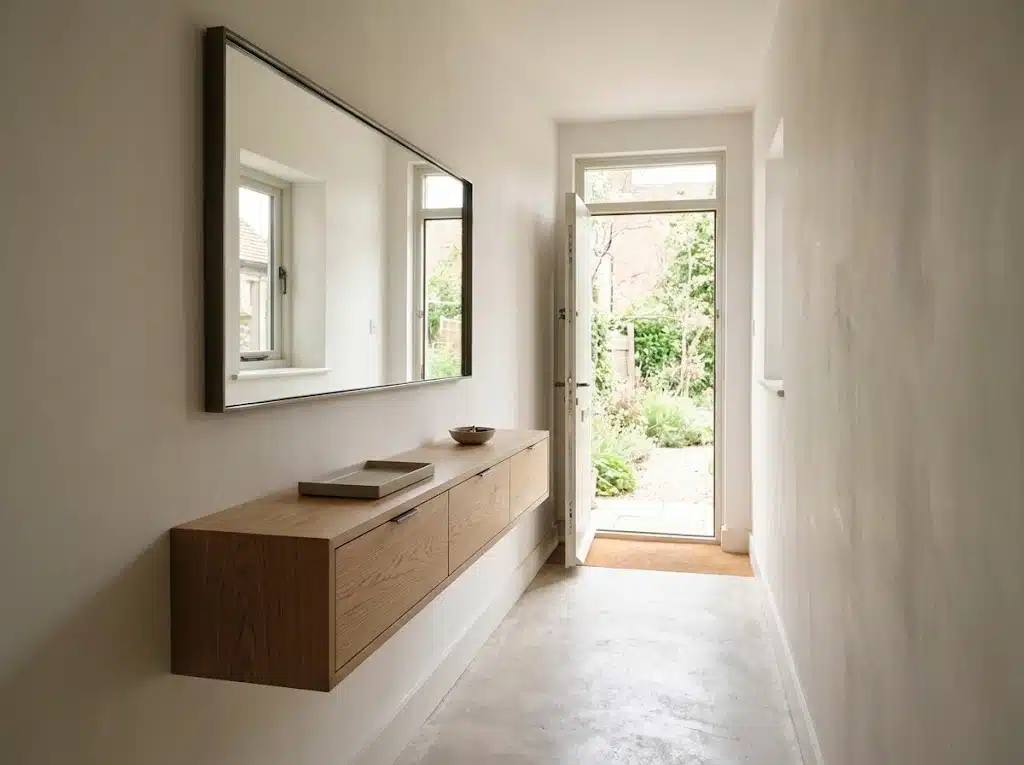
Pair a shallow sideboard with a wall-mounted mirror and a small tray for keys and daily essentials. Keep taller decorative accessories away from the outer edges to reduce the chance of passing bags or coats catching them.
Check what the mirror will reflect before fixing it to the wall. A view towards an adjacent window or open doorway can reflect light and make a compact entrance feel more open, whereas a reflection of cluttered coat hooks can have the opposite effect. A well-placed mirror adds visual depth, but it cannot compensate for furniture that intrudes into the walkway.
For a cohesive look, choose a mirror frame that picks up on the sideboard’s handles or another hardware detail in the room. Add a single low bowl or catch-all tray rather than scattering several small ornaments. If there is no room for a table lamp without crowding the surface, leave it out—a narrow hallway does not need every decorative element to feel complete.
Soft Lighting for a Darker Entrance
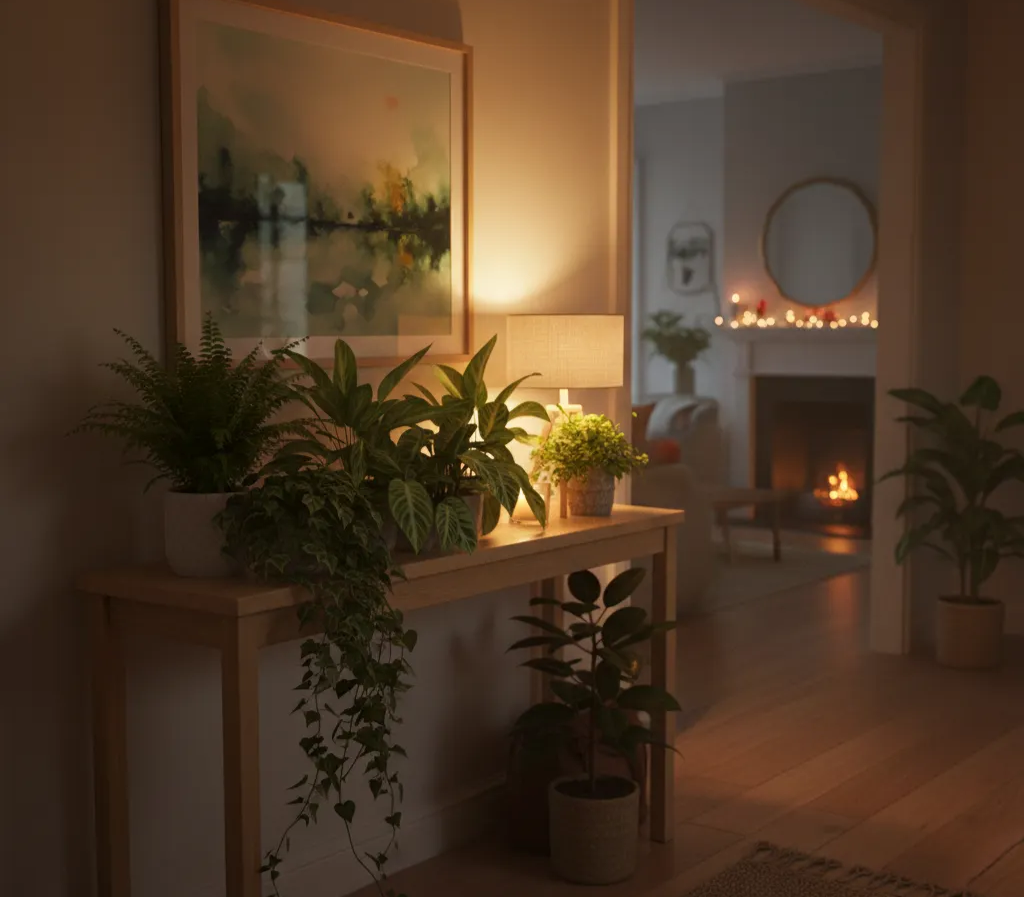
Try placing a compact lamp at one end of the sideboard, balanced with a small plant or vase at the other. Check both the lamp base and the shade before finalising your arrangement: a slim base can still come with a wide shade that projects into the passage.
Plan the arrangement around your wall socket so the cable stays tidy and out of the walking route. When selecting greenery, choose indoor plants that thrive in low light, or use cut foliage rather than placing a living plant somewhere it will struggle. Leave the middle of the surface usable, with room to set down post or everyday items as you come through the door.
A Wider Sideboard with Artwork for a Spacious Entrance
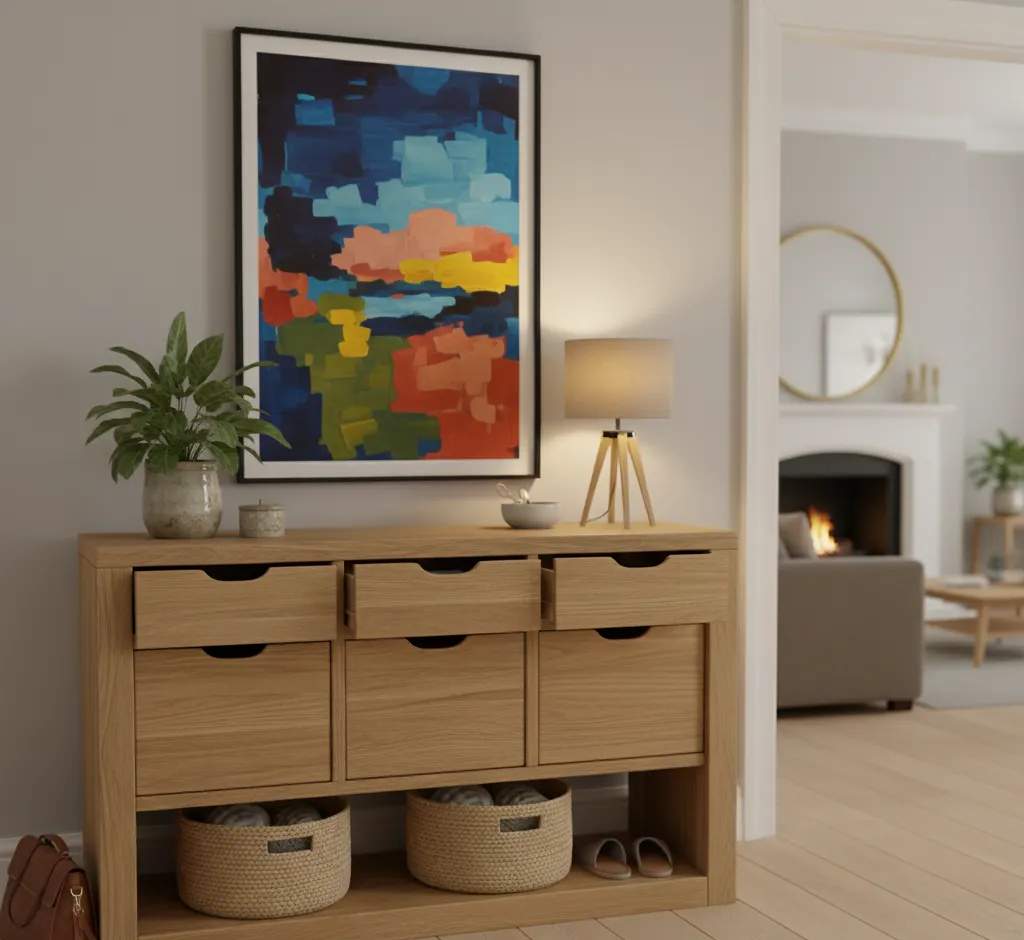
A wider entrance can accommodate a more substantial sideboard with artwork above. Starting with the artwork can make styling simpler: once your print or painting is in position, pick out a complementary colour or texture for a vase, lamp, or bowl below. There is no need to fill every gap—leaving open space helps the display feel calm and considered.
Check your display from the front door as well as close up. If the artwork and lamp compete for attention, simplify one element to restore balance. Keep decoration clear of opening cabinet doors and drawers so the piece remains easy to use.
When arranging the surface, try working with different heights: place a taller lamp at one end, a lower bowl nearer the middle, and artwork above. Treat this as a flexible starting point rather than a strict rule. A favourite print may work better with a single companion piece, especially if its colours or pattern already make a strong statement.
Concealed Storage and Baskets for a Busy Household

Drawers and cupboards help keep small everyday items out of sight, maintaining an uncluttered hallway. Where a sideboard has open shelving, woven baskets can group gloves, scarves, or reusable bags while adding warmth and texture to the entrance.
Measure the shelf opening and the basket together, allowing enough room to slide and lift the basket out easily. A basket squeezed too tightly into a compartment soon becomes awkward to use during the morning rush. Pair open-basket storage with a simple display above so the overall arrangement looks intentional and well-considered.
If you are looking for furniture designed to fit your home’s dimensions and requirements, explore our bespoke hallway furniture options.
Choosing the Sideboard Before the Accessories
A sideboard can work well in a hallway, provided its position, depth, and storage openings allow the entrance to function comfortably. Before choosing accessories, measure the available wall space and check:
- Door clearances: Ensure the front door and any nearby internal doors can move through their full swing without hitting the sideboard.
- Drawer and cupboard access: Measure the total space occupied by fully open drawers and cupboard doors to ensure you can reach everything easily.
- Architectural features: Take note of skirting boards, wall sockets, light switches, and other fixed architectural details.
- Walking routes: Account for the main route people use while carrying shopping, coats, or heavy bags through the hall.
Marking the proposed footprint on the floor with masking tape can help you judge the depth before committing. Avoid relying on a single, generic clearance figure: every entrance hall has its own layout, dimensions, and walking routes.
If you prefer the flexibility of a movable piece, our freestanding furniture guide covers the practical checks. For made-to-measure projects, our process runs from the initial survey and design through to custom manufacture and installation, with the layout agreed before manufacture begins.
When to Leave Some Space Unstyled
More decoration creates more things to move when you need to use the surface. Give your daily essentials a defined area and keep the remaining display space simple.
Test your arrangement through an ordinary, busy week before buying more accessories. Notice where post gathers, whether your key tray is easy to reach, and what needs to be moved to open a drawer smoothly. Resolve those awkward spots before adding more decoration. Seasonal updates can stay modest: swap the contents of a vase or change a single decorative object rather than adding another layer to the display.
In many entrance halls, a well-chosen lamp, a favourite picture, and a practical catch-all tray are enough. If you also need to accommodate heavy winter coats, everyday footwear, and several bags, consider wider fitted hallway furniture options rather than expecting a single shallow sideboard to solve every storage challenge.
Frequently Asked Questions
Does a sideboard need to be secured to the wall?
Follow the manufacturer’s fixing instructions and check stability, especially in homes where children could climb or pull on furniture. Suitable wall restraints help address furniture tip-over risks; fixings must suit both the unit and your wall type.
Can I put a sideboard near a radiator?
Check both the radiator and furniture manufacturers’ guidance before finalising the sideboard’s position. Keep heating controls accessible and avoid obstructing heat circulation; there is no single clearance gap that suits every hallway arrangement.
How can I protect the top from keys and plant pots?
Use a catch-all tray for keys and suitable protective mats beneath pots, following your finish supplier’s advice. Wipe up moisture or spills promptly, and do not assume a decorative planter is completely watertight.
Can a freestanding sideboard be levelled on an uneven floor?
Some freestanding pieces have adjustable feet or hidden levelling bases, but this is design-specific. Ask the maker how the unit should be levelled and secured rather than improvising an unstable support on an uneven hallway floor.
What should I prepare before asking for design advice?
Gather a few room photographs, rough width and depth measurements, and a clear list of what you need to store. Our guide to preparing for a quote explains how combining inspiration images with your practical requirements can help make the design discussion as productive as possible.
Bring Your Hallway Sideboard Ideas to Life
A welcoming entrance starts with a sideboard that suits your space and everyday routine. Whether you are considering a slim design for a narrow hallway or a larger piece with concealed storage, we can help you explore made-to-measure options that balance practical needs with your preferred look.
Share a few photographs, rough measurements, and the styling ideas you like, along with a list of what you need to store. Our survey and design process can help you refine the proportions and layout before manufacture and installation.
To discuss your hallway sideboard ideas or quote requirements, contact our design team or call 01462 814080.