


Freestanding furniture gives you more control over how a room works. A wardrobe, desk, cabinet or sideboard can stand independently, adapt as your needs change and be moved to another room or property when your living arrangements change. The key question is not simply whether a piece looks good. It is whether its size, storage capacity, construction and delivery requirements suit the way you live.
This guide will help you turn a general idea into a clear buying brief, whether you are considering a standard off-the-shelf product, a bespoke freestanding piece or a fitted alternative tailored to your home.
What Is Freestanding Furniture?
A freestanding item stands independently rather than being permanently built into a wall, alcove or floor. Common examples include wardrobes, chests of drawers, desks, shelving units, sideboards, tables and cabinets.
That does not always mean the piece is lightweight or easy to dismantle. A substantial timber wardrobe may be movable in principle, but it could still require several people, specialist handling or partial disassembly to relocate safely.
If tall or heavy furniture could tip, secure it in line with RoSPA’s furniture safety guidance and the manufacturer’s instructions. Check the build and stability of the specific product rather than relying on a general label.
Types of Freestanding Pieces and Where They Work
Bedrooms
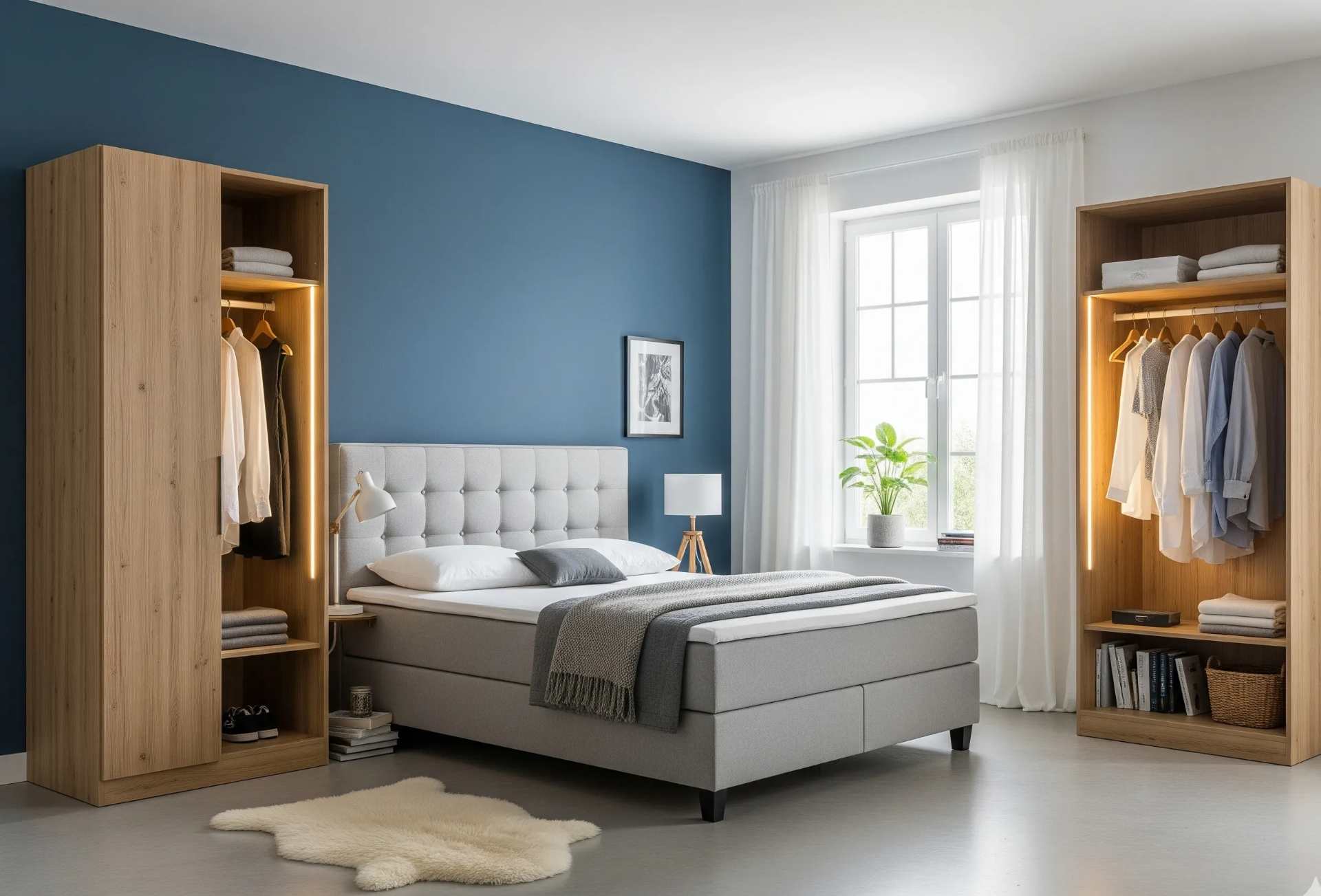
Bedrooms commonly use wardrobes, chests of drawers, dressing tables and bedside storage. Start by assessing what you need to store: long garments require enough hanging height, folded clothing needs practical shelf spacing, and smaller items are usually easier to organise in dedicated drawers. Our bedroom furniture service shows how storage can be planned around a room’s layout and daily use.
Living Rooms and Hallways
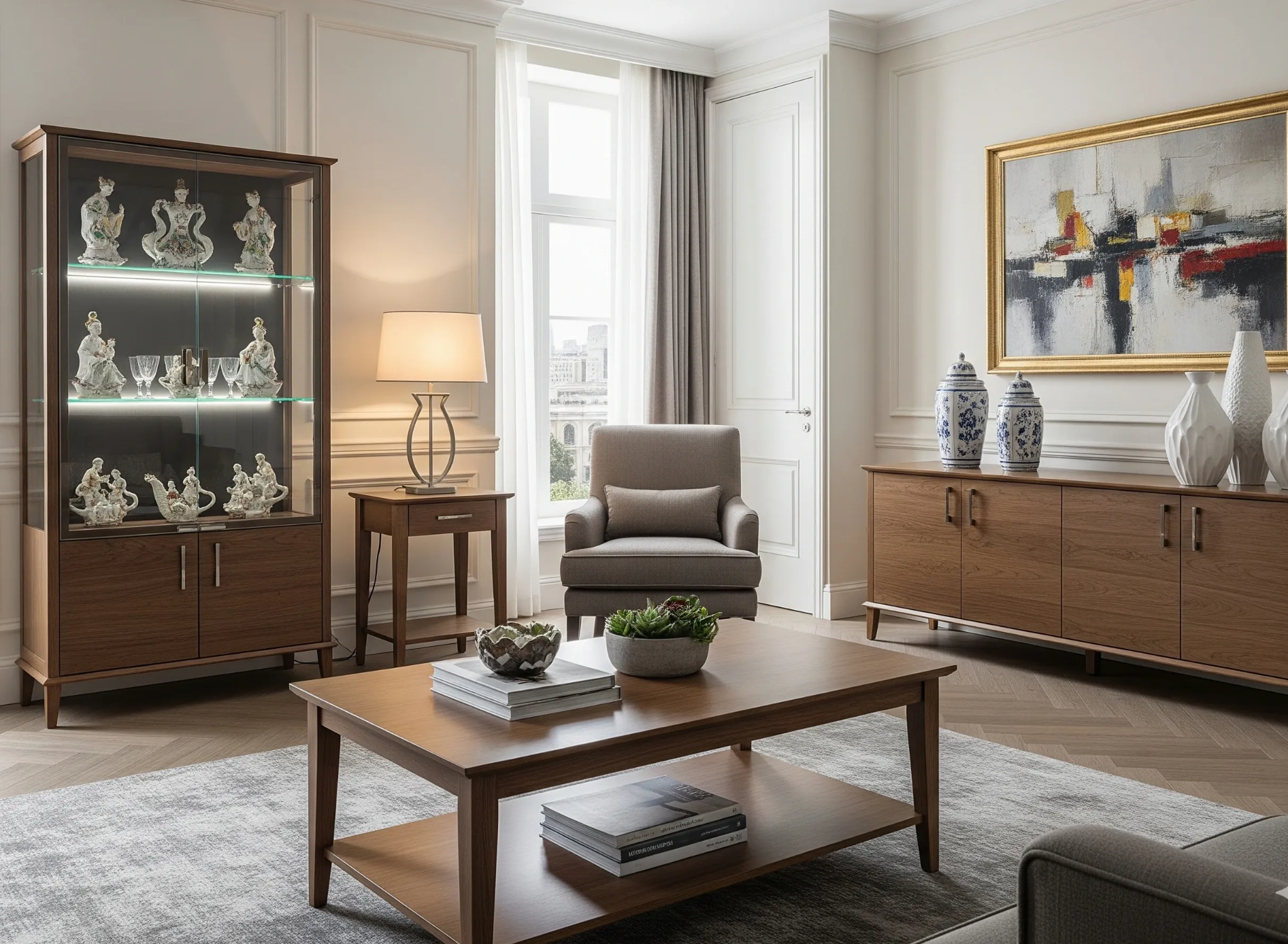
Living rooms and hallways suit sideboards, display cabinets, bookcases and movable storage units. Depth is especially important in these spaces. A piece may fit the width of a wall yet still narrow a main walkway or clash with an opening door.
Home Offices and Flexible Spaces
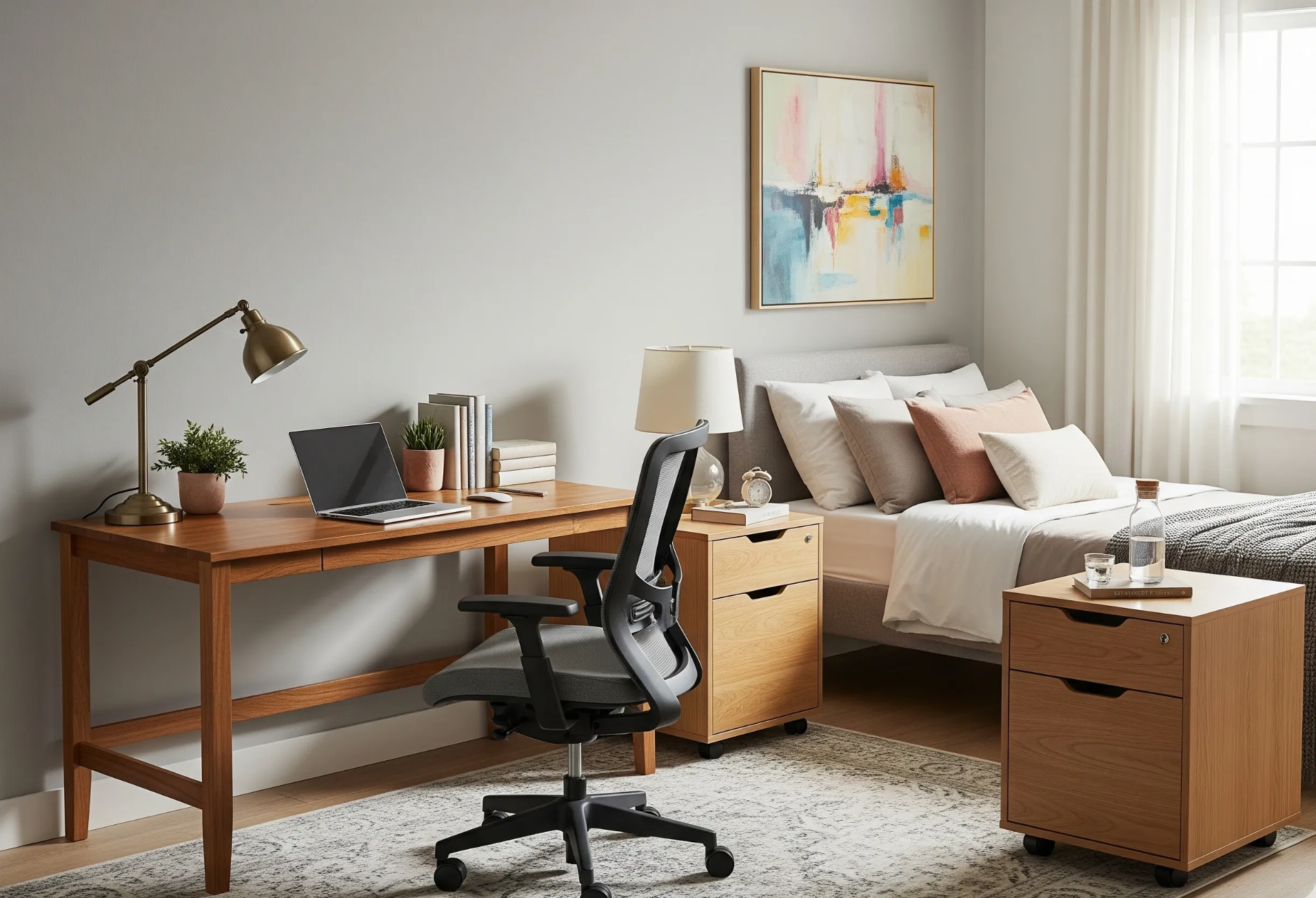
A freestanding desk or drawer unit works well in a home office or flexible spare room because the layout can adapt as your needs change. Plan around chair clearance, power sockets, equipment cables and everyday access to storage, rather than focusing only on the available wall width.
How to Choose the Right Piece
Start with Its Job
List what the unit must hold or support before choosing a finish, and separate essential functions from preferences. For a wardrobe, that might mean full-length hanging space, folded storage and drawers. For a sideboard, it could mean crockery, paperwork or media equipment.
Plan ahead without trying to solve every possible future need. Adjustable shelves offer useful flexibility, while a highly specialised layout may be harder to adapt later. If you order online, check the purchase terms before paying, as standard consumer cooling-off rights generally do not cover custom, personalised or made-to-measure items.
Measure the Room and Delivery Route
Record the available width, height and depth of the intended space. Note skirting boards, power sockets, radiators, windows, door swings and uneven floors. Leave enough clearance for doors and drawers to open fully and for people to move comfortably around the piece.
Next, measure the full delivery route into the room: external and internal doors, corridors, staircases, landings, ceiling heights and tight turns. A cabinet can fit its final position perfectly yet still be impossible to deliver in one piece. Ask whether it has detachable components and whether it is designed to be reassembled once inside.
Check Construction, Materials and Hardware
Look beyond the visible finish. Check the structural material, back panel, joints, shelf supports, hinges, drawer runners and handle fixings. Shelves should support their expected load, while doors and drawers should operate smoothly without rubbing or excessive side-to-side movement.
Durability depends on the complete specification and the quality of manufacture. Fitted furniture is not automatically stronger, and a movable unit is not inherently less durable. Cost also varies according to dimensions, materials, hardware and customisation, so the idea that freestanding furniture is always cheaper is rarely reliable.
Plan Storage Around Your Belongings
Effective storage should reflect your daily habits. Count the garments that need hanging, estimate how much folded storage you require and decide which items should be easiest to reach. Adjustable interiors offer flexibility if your needs change, while fixed components can make sense when the purpose is already clear.
This is where bespoke freestanding design earns its place. It gives you furniture tailored to your room dimensions and storage requirements without creating a permanent built-in installation.
Choosing a Freestanding Wardrobe
Measure the wardrobe’s footprint, the depth of its open doors and the clear space needed to stand comfortably in front of it. Sliding doors can reduce the required clearance, while hinged doors give direct access to a wider section. Neither option is universally better; the right choice depends on your room layout.
Inside, decide on the right balance of full-height hanging, double-hanging space, shelves and drawers. Check whether the configuration is fixed, adjustable or made to order. Renters and frequent movers should also ask about the overall weight, detachable components and assembly method before buying.
A bespoke freestanding wardrobe can be made around your chosen dimensions, finishes and storage needs, but do not assume it will be easy to move. If you are weighing permanence against flexibility, our guide to built-in vs freestanding wardrobes covers that decision in more detail.
Freestanding Furniture Buying Checklist
Before requesting design advice or placing an order, prepare:
- The intended use and a list of items to be stored
- Room width, height and depth measurements
- Delivery-route measurements, including doors, hallways, staircases and tight turns
- Clearance for doors, drawers and movement around the room
- Required hanging, shelving and drawer layouts
- Material, finish and handle preferences
- Hardware requirements, such as soft-close hinges or heavy-duty runners
- Whether future movement or dismantling matters
- Your budget and expectations for long-term use
- Questions about delivery, assembly, fixing and care
When Fitted Furniture Makes More Sense
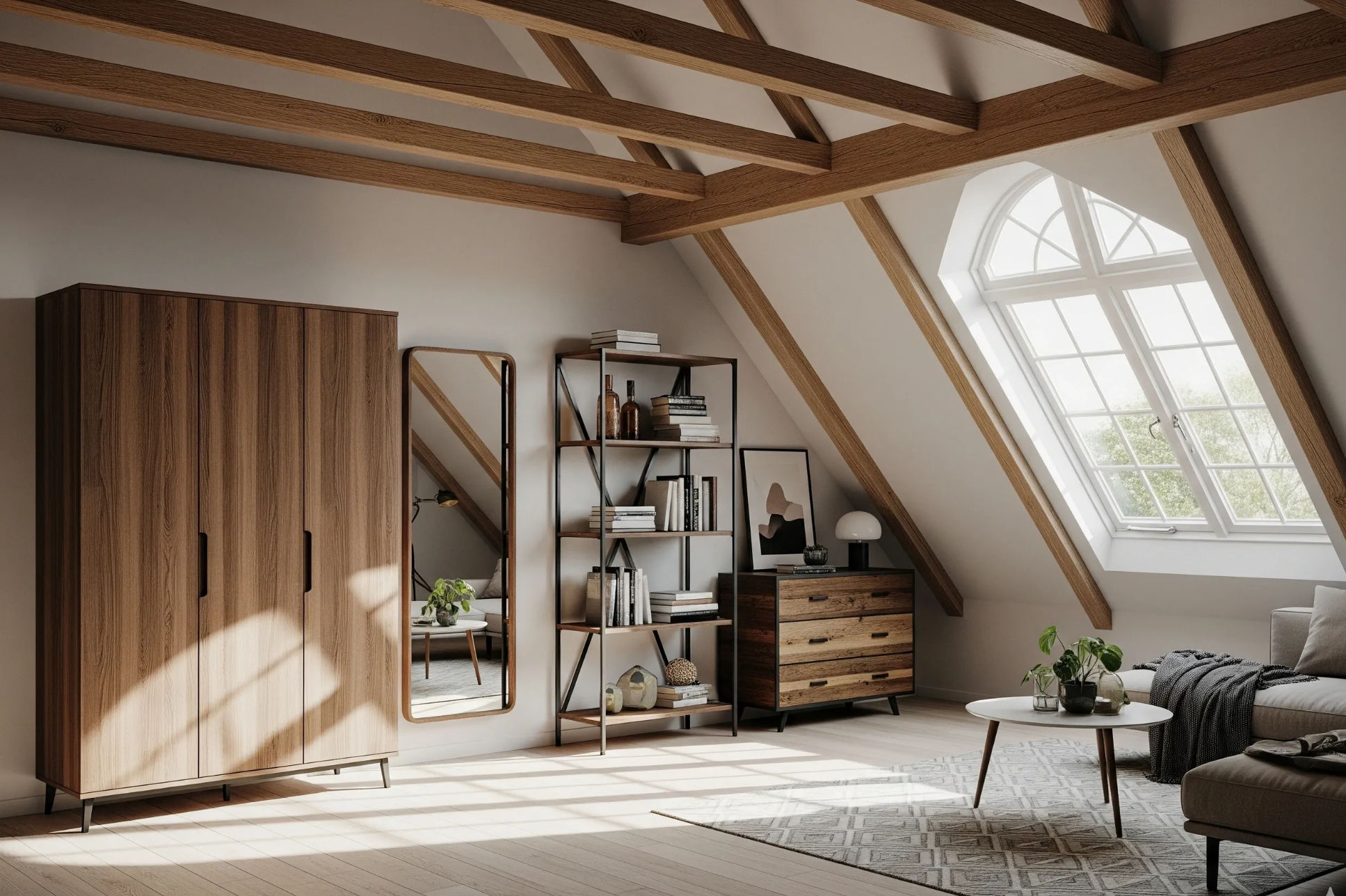
Freestanding pieces suit changing layouts, rental homes and situations where you may want to take the furniture with you when you move. Fitted designs can be more practical when your priority is making the most of irregular corners, sloping ceilings, alcoves or floor-to-ceiling space.
For many rooms, the best answer is a thoughtful mix of both. A fitted wardrobe can make use of an awkward bedroom wall, while a movable desk or freestanding drawer unit keeps the rest of the room adaptable. Read our full comparison of fitted vs freestanding furniture if you are considering both options.
Frequently Asked Questions
Does freestanding furniture need to be fixed to the wall?
It depends on the height, design, load and product instructions. Follow the manufacturer’s fixing guidance, especially for tall units, heavy bookcases or furniture used around children.
Can bespoke freestanding furniture be dismantled when moving house?
Only if it was designed and assembled for that purpose. Confirm the assembly method, detachable components and reassembly requirements with the maker before placing an order.
Can a freestanding unit be adjusted for uneven floors?
Some designs include levelling feet or adjustable bases, but this is product-specific. Check which adjustments are available and whether they are suitable for your floor and the expected load.
What should I measure along the delivery route?
Measure external entrances, internal doors, corridors, staircases, landings, ceiling heights and tight turns. Account for handles, light fittings, handrails and other fixed obstructions that reduce the usable opening.
How should furniture finishes be maintained?
Follow the manufacturer’s care instructions for the exact material and finish. Avoid applying a general wood, metal or upholstery treatment unless it is approved for that surface.
Speak to Us About Bespoke Freestanding Furniture
If standard sizes or internal layouts do not suit your room, we can discuss a bespoke piece built around your measurements, storage needs and preferred finish. We will help clarify the specification before manufacture begins and explain whether a freestanding or fitted approach makes the most sense for your home.
To discuss your ideas with Propafit Interiors, visit our contact page, email [email protected], or call 01462 814080.