


Choosing bookshelves for living room spaces starts with the room, rather than the catalogue. The right unit needs to hold your books securely, work around existing features, and leave enough space to move comfortably.
At Propafit Interiors, we design, manufacture, and install made-to-measure furniture. A fitted bookcase can turn awkward dimensions into genuinely useful storage, although a freestanding unit may still be the better choice if you like to rearrange your room or plan to take the furniture with you when you move.
The Problem with Freestanding Bookshelves in Modern Homes
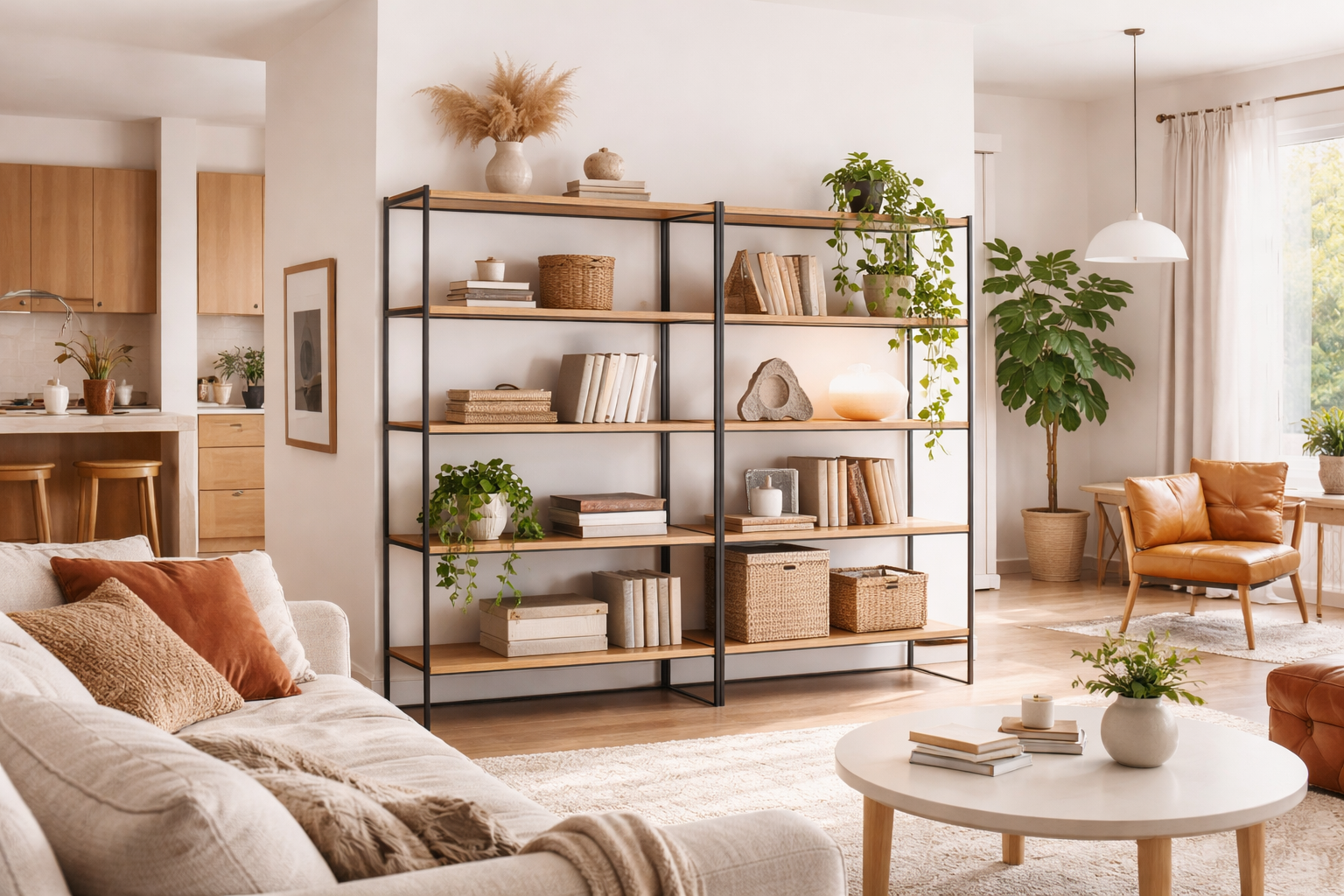
A standard bookcase comes in fixed dimensions. If it is narrower than an alcove or shorter than the ceiling, the unused space remains visible. Skirting boards can also stop a unit from sitting flush against the wall, leaving a gap where dust collects. A collection of different-sized units can make a room feel visually busy, even when the books are tidy.
That does not make freestanding furniture a poor choice. It is easier to move and generally costs less initially. However, if the available wall has awkward proportions, it is worth weighing the extra storage a fitted design can provide against the flexibility you would give up. Whatever option you choose, any tall furniture at risk of tipping should always be securely anchored to the wall, particularly in homes where children are present.
Why Choosing Bookshelves for Living Room Spaces Often Leads to Bespoke
Fitted bookcases are made for the dimensions and storage requirements of a particular room. The practical advantage is control: you can plan where your books sit, how deep each shelf needs to be, and which areas should be closed off. Our ultimate bespoke bookcase guide offers further ideas for planning a unit around its contents.
Maximising Floor-to-Ceiling Dimensions

A tall fitted unit can use the wall space above a standard bookcase without projecting further into the room. Keep everyday books within comfortable reach and reserve the highest shelves for items you use less frequently. Closed cupboards at the base can conceal household essentials, leaving open shelving for books and a few favourite objects.
Height alone is not the goal, however. Check how far the unit will project into the room and ensure that doors and curtains can open and walkways remain clear. Our guide to fitted storage in small living spaces looks closely at making those practical choices in more compact rooms.
Overcoming Skirting Boards and Awkward Gaps
Skirting boards, uneven walls, and changes in floor level can make a straight-edged unit difficult to position neatly. With a fitted design, these features are accounted for during the survey and installation. Side panels can be shaped to follow an adjoining surface, or a planned trim can provide a neat transition.
Before settling on a design, check the wall at different heights and note plug sockets, radiators, and any access needed for maintenance. The aim is a workable fit for the room rather than a design that assumes every surface is perfectly square.
Unlocking the Potential of Chimney Breast Alcoves
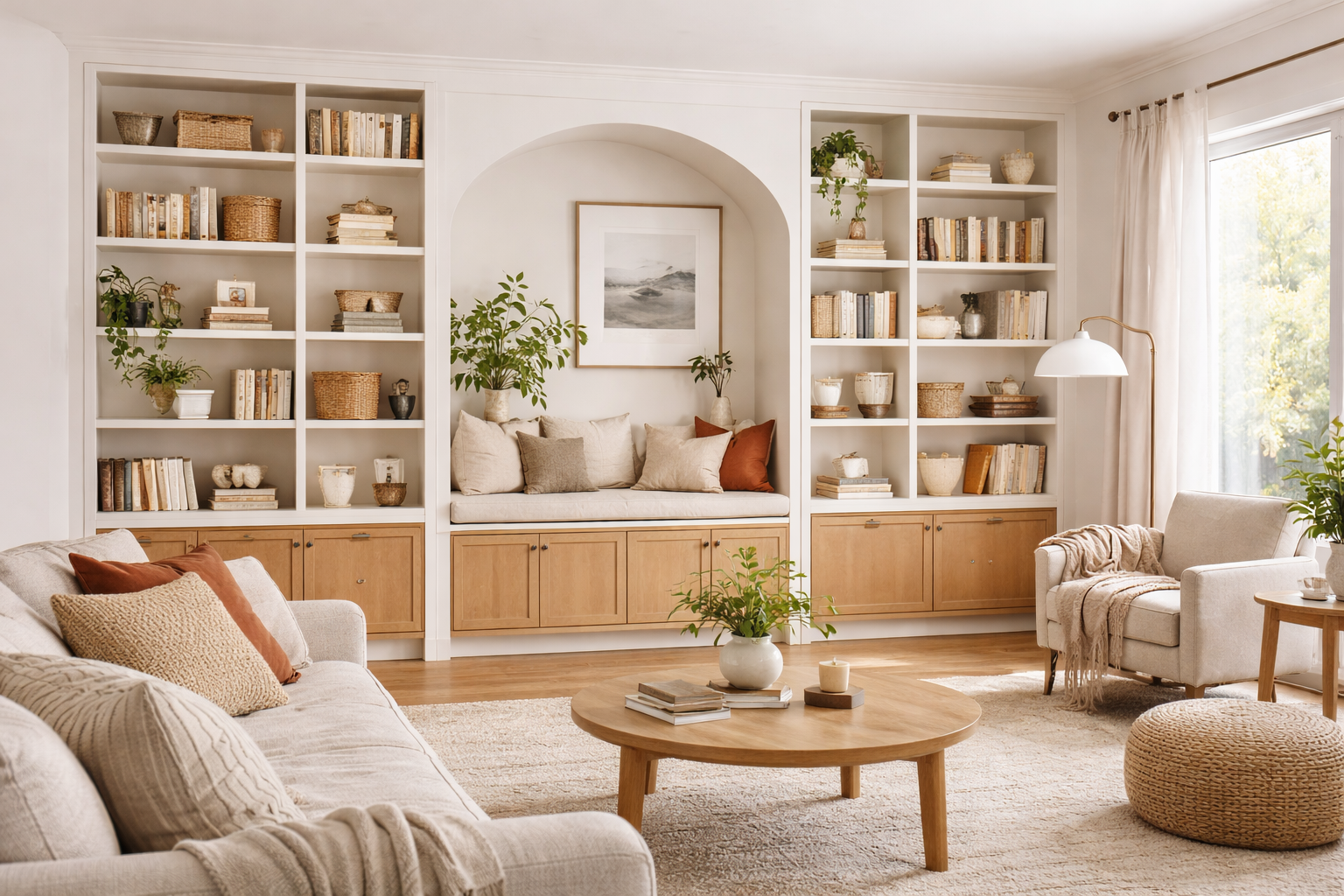
An alcove beside a chimney breast can become a practical home for books that would otherwise need a separate freestanding unit. Shelves can be tailored to the width and depth available on each side, even when the two recesses are different sizes.
Consider whether you want matching layouts or a slightly different arrangement on each side. A closed cupboard below the shelves can hide smaller items, while open sections keep your books accessible. You can read more about the potential of alcoves if you are weighing up your options.
Looking to rethink the wider room too? Explore our bespoke living room furniture for tailored storage that works seamlessly with the rest of your space.
Key Considerations for Bespoke Living Room Bookshelves
A successful bookcase starts with what it needs to hold. Gather the books you read most often, identify any oversized volumes, and think about what else needs a home. Then consider the surrounding furniture, how natural light reaches the wall, and whether you would prefer to conceal certain items behind doors.
Shelf Depth and Weight Capacity
Measure the depth and height of your books before deciding on shelf dimensions. Large art books and photo albums need more room than standard paperbacks, so varied shelf heights and depths can help avoid wasted space.
Heavy hardbacks also need proper support. The weight a shelf can safely carry depends on its material, thickness, span, and fixings. Discuss the intended load with your designer early on, particularly if you favour long, uninterrupted shelves. Shorter shelves or discreet vertical dividers may be sensible for a substantial collection.
Integrating Book Storage with Media Units
If your television shares the same wall, plan your book storage and media equipment together. Allow for device dimensions, concealed cables, ventilation, and future access rather than simply filling every available gap. Our comparison of a TV stand or media unit can help you decide how much of the wall should be dedicated to entertainment.
Finishing Touches After the Layout
Once the practical layout is settled, arrange your books in a way that suits how you use them. Grouping titles by subject makes a larger collection easier to navigate, while leaving room for framed photographs or ceramics can soften a long run of spines. Combining open shelving with lower cupboards keeps everyday clutter out of sight without hiding the pieces you enjoy displaying.
Planning Your Bookshelves for 2027
If you are planning a living room update for 2027, start by deciding what your shelves need to hold and where they will sit. Measure the available wall or alcove, photograph any skirting boards, plug sockets, and radiators, and note the dimensions of your largest books. Rough measurements are enough for an initial conversation; a home survey will establish the details needed for a fitted design.
Think about how you expect to use the room over the coming years, too. If your book collection is likely to grow, allow some spare shelf space. If you are also replacing your television or updating other furniture, mention those plans early so the bookcase works with your finished layout. Ask about design, manufacture, and installation lead times when you enquire, as the schedule will depend on the scope of your project.
Frequently Asked Questions
How deep should bookshelves for living room spaces be?
A depth of around 250–300 mm may be a useful starting point for standard books, but the right depth depends on your collection. Measure your largest volumes as well as typical paperbacks, and allow enough room for each book to sit securely without overhanging the front edge. Large art books and albums may need a deeper lower section than the rest of the collection.
Can fitted bookshelves be installed in awkward alcoves?
Yes, they can be custom-designed to fit recesses of varying widths and depths. A home survey establishes the available space and identifies skirting boards, plug sockets, or other features the installation needs to accommodate.
Are bespoke bookcases a good investment compared with freestanding bookcases?
Bespoke shelving can be worthwhile when a seamless fit, integrated appearance, and tailored storage matter to you. Freestanding furniture may be preferable if you plan to move house soon or want a lower upfront cost; neither option guarantees an increase in property value.
How much weight can custom living room bookshelves hold?
There is no single safe weight limit that applies to every design. Ask your designer or installer to specify the shelf material, thickness, span, and supports for your intended load, especially if the shelves will hold rows of heavy hardbacks.
Can I integrate lighting into my bespoke living room bookshelves?
Yes, integrated lighting can be incorporated into the initial design, with space planned for LED fittings, concealed cables, and access to the driver. Discuss your preferred lighting and any necessary electrical work before the furniture is manufactured.
Plan Your Project with Propafit Interiors
Want a more organised living room without leaving your favourite books out of reach? Tell us what you would like to store and display, from paperbacks and hardbacks to framed photographs and larger volumes. A few room photographs and rough measurements can help us discuss where fitted bookshelves could sit and how they would work around your alcoves, skirting boards, and existing furniture.
At Propafit Interiors, we support you through every stage—from initial survey and design to manufacture and installation. Our Shefford-based team serves Hitchin and creates bespoke living room furniture tailored around your space, including alcove shelving in Hitchin.
To discuss fitted bookshelves for your living room, get in touch with our team by emailing [email protected] or calling 01462 814080.