

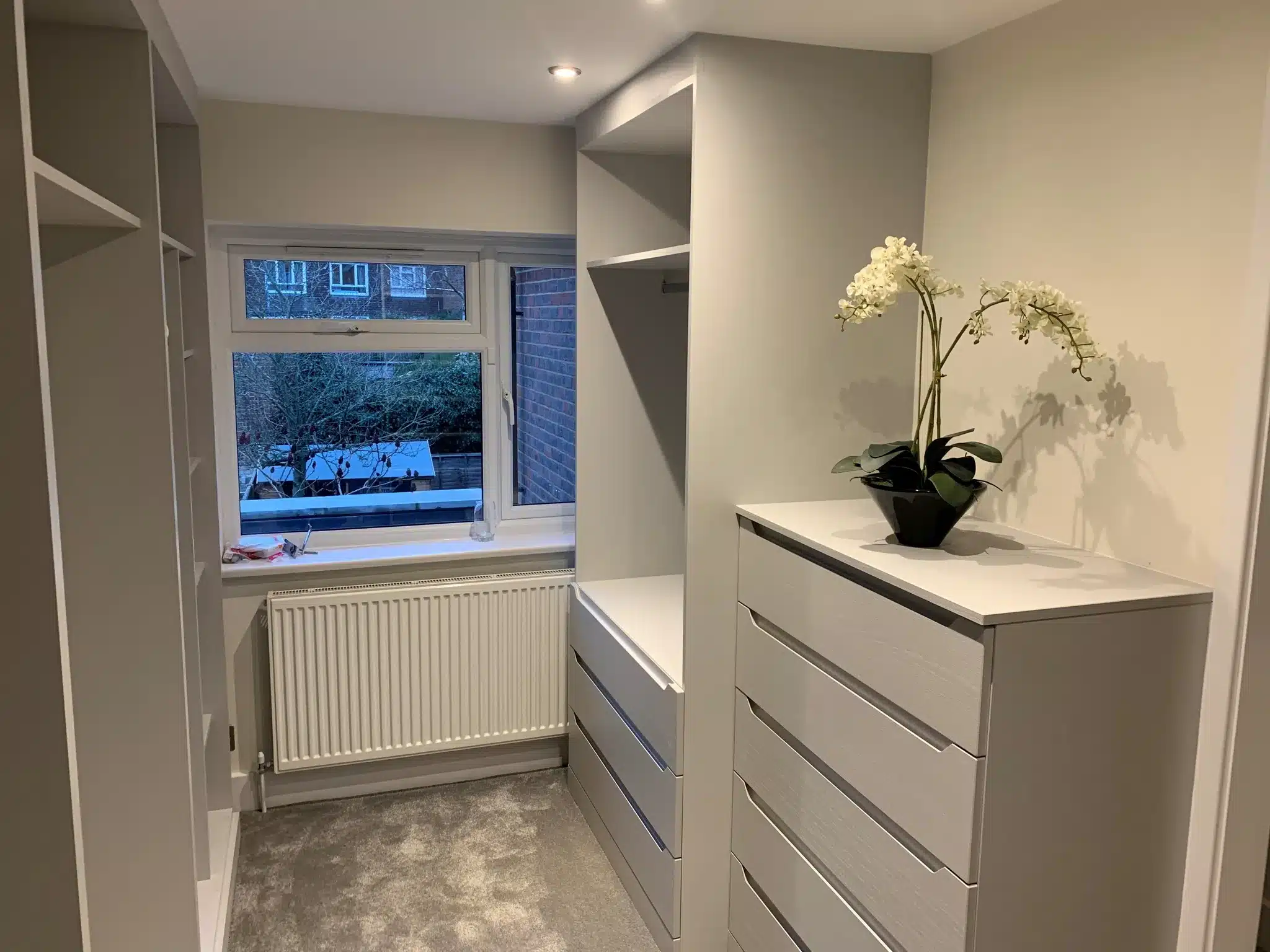
Fitted wardrobe features are worth paying extra for when they make the wardrobe itself easier to use, more durable, and better suited to the way you actually live. The expensive mistake is paying for details that look good in a showroom but do very little once the wardrobe is full of clothes, shoes, bags, bedding, and everything else that somehow ends up in a bedroom.
At Propafit Interiors, we are on your side in that decision. A fitted wardrobe is already a significant investment, so upgrades should earn their place. The right ones protect your fitted wardrobe’s structure, improve day-to-day access, and help the room work harder, while the wrong ones just eat into your budget.
Start With The Problem
A good wardrobe brief starts with what is frustrating you now. Maybe hanging space is wasted. Maybe deep shelves turn into a black hole. Maybe the room is awkward, with sloped ceilings, chimney breasts, or tight corners. Maybe you simply want a bedroom that feels calmer because everything has a proper place.
That is why we treat upgrades as answers to specific problems. If you are already comparing built-in and freestanding wardrobes, the real benefit of going fitted is control: control over the dimensions, the storage mix, the finish, and how much of the room is genuinely usable.
Based on experience, it’s best to keep this simple rule in mind: if an upgrade saves space, reduces wear, improves access, or makes the furniture easier to live with for years, it is worth considering. Be careful choosing fitted wardrobe features just to make it look nicer on camera.
The Fitted Wardrobe Features That Earn Their Keep
Internal Drawers
Internal drawers are one of the most practical upgrades because they stop small items from taking over shelves. Socks, accessories, folded tops, gymwear, and seasonal items are easier to find when they sit in a drawer rather than in a stacked pile.
They are especially useful in smaller bedrooms, where every extra chest of drawers makes the room feel tighter. If floor space is already limited, replacing freestanding storage with well-planned internal drawers can make the whole room work better, especially if you are already planning fitted wardrobes for a small bedroom where every spare centimetre matters.
Double Hanging and Adjustable Rails
Not every wardrobe needs full-height hanging from end to end. For shirts, trousers, skirts, jackets, and children’s clothes, double hanging often gives you more usable capacity than one tall rail with dead space underneath.
Adjustable rails are worth discussing too. They give the wardrobe more flexibility if your storage needs change later. That matters because a fitted wardrobe should not only solve today’s mess. It should still make sense when your clothing, routines, or room use changes.
Pull-Out Shoe Storage
Shoe storage is often where wardrobes fail. A deep low shelf sounds fine until you are crouching down, moving pairs around, and forgetting what is at the back.
Pull-out shoe storage improves visibility and access. For households that keep shoes in the bedroom, this is one of those upgrades that feels small at the quote stage and useful every week afterwards.
Soft-Close Hinges and Drawer Runners
Soft-close hardware is not just a nice touch. It reduces slamming, protects the cabinetry, and makes the furniture feel better built for daily use. Cheaper hardware can become annoying quickly, especially on doors and drawers that are opened several times a day.
This is one place where the hidden specification matters. Ask what runners, hinges, and mechanisms are being used, not just what the outside will look like. Good fitted furniture depends on the parts you do not see just as much as the finish you do.
Lighting That Helps You Use the Wardrobe
Wardrobe lighting is worth paying for when it solves a real visibility problem. If the wardrobe is deep, the room is naturally dark, or you often get ready early in the morning, integrated lighting can be genuinely useful.
The key is restraint. Lighting should help you see colours, shoes, and folded items clearly. It does not need to turn the wardrobe into a display cabinet unless that is what you want.
Stronger Materials In High-Wear Areas
Some areas work harder than others: drawer boxes, hanging sections, shelves holding heavy folded clothing, and tall doors. Spending more on stronger materials or better construction in those places can improve longevity.
This is also where a made-to-measure provider should guide you honestly. If a premium finish is mostly decorative, we will say so. If a stronger construction detail will help the wardrobe hold up better, that is a more sensible place to spend.
The Budget Test: Will This Feature Still Matter In Five Years?
A wardrobe upgrade should pass the five-year test.
Will you still notice it when the novelty has gone? Will it make the wardrobe easier to use when life is busy? Will it stop you needing extra furniture elsewhere in the room?
That is why accessibility and storage efficiency matter more than surface-level extras. A well-planned wardrobe can make daily routines smoother, reduce clutter, and support how the bedroom is actually used. If you are thinking about the wider investment, it is also worth reading our guide on whether fitted furniture can add value to your home. Buyers may not care about every internal fitting, but they do notice smart storage, tidy rooms, and furniture that feels made for the space.
How to Explain What You Need to Your Furniture Maker
The best conversations are specific. Instead of saying “we need more storage”, explain what you own and what currently annoys you.
Tell your designer:
- How much long hanging and short hanging you need
- Whether shoes, bags, bedding, or suitcases need to fit
- What you use every day versus seasonally
- Whether the wardrobe is shared
- What you want hidden, displayed, or easy to reach
- What budget range you are trying to protect
Photos help too, in the same way that it helps to note how large the items causing you problems are. If you have a suitcase that must fit, show it. If your current wardrobe has one shelf that always collapses into chaos, mention it. These small details lead to better design decisions, and it can help to work through the questions to ask before ordering fitted furniture before you sign anything off.
How to Choose the Right Provider
Choose a fitted furniture provider who asks awkward practical questions. The finish matters, of course. But the person designing the wardrobe should also care about access, door clearance, internal layout, awkward corners, and how the furniture will be used once it is full.
Look for a provider who can explain trade-offs plainly. For example, sliding doors can be brilliant in tight rooms, but they affect how much of the wardrobe you can see at one time. Extra drawers improve organisation, but too many can reduce hanging space. Open shelving looks neat when styled, but closed storage may suit real life better.
That kind of honest guidance is a good sign. You want someone who can help you spend in the right places. Our article on how to get a quote for fitted furniture explains what to prepare so your quote is clearer from the start.
Common Upgrade Mistakes to Avoid
The first mistake is copying someone else’s wardrobe. Their room, clothing, budget, and habits are not yours.
The second is spending too much on visible finishes while under-specifying the interior. A wardrobe can look beautiful and still be frustrating if the hanging space is wrong or the drawers are too shallow.
The third is forgetting maintenance. Intricate details, awkward corners, and overly decorative surfaces can be harder to clean. If you want something that stays looking good, choose features that support daily use, not just the first impression.
A better approach is to prioritise the upgrades that remove friction. If the feature helps you store more, reach more, protect the furniture, or use the room better, it probably belongs on the shortlist.
FAQs
Which fitted wardrobe feature is most worth paying extra for?
Internal drawers are often one of the most useful upgrades because they reduce the need for extra freestanding furniture and make small items easier to organise. The best feature still depends on your room and storage habits, so it should be chosen around your routine rather than as a default extra.
Are soft-close wardrobe doors worth it?
Soft-close doors and drawers are usually worth considering because they reduce slamming and make the furniture feel better in everyday use. They are most valuable on wardrobes used heavily every day, especially in shared bedrooms.
Do fitted wardrobes help with resale value?
Fitted wardrobes can support resale appeal when they make a room feel more practical, spacious, and well finished. They should not be treated as a guaranteed value increase, but good storage is something many buyers notice during viewings.
Speak to Us About Fitted Wardrobe Features
If you are planning fitted wardrobes and want to protect your budget from the wrong upgrades, we can help you choose what is worth including and what can be skipped.
Propafit Interiors designs, manufactures, and installs fitted furniture for bedrooms, living areas, kitchens, offices, media units, shelving systems, and dressing rooms across Bedfordshire, Hertfordshire, Buckinghamshire, Cambridgeshire, London, and nearby areas.
For more information, you may reach out to us through our contact page, send us an email at [email protected], or give us a call at 01462 814080.