


Hidden drawers can keep smaller belongings neatly out of sight behind a wardrobe front, helping a minimalist bedroom feel calm and uncluttered.
The trade-off is an extra step: opening the wardrobe door before pulling out the drawer. Whether that suits your daily routine depends on what you store, how often you use it, and how the layout works in your room.
Start with What You Need to Reach Every Day
Before choosing a drawer configuration, group your belongings by the space they need and how often you use them:
- Small accessories: Jewellery, watches, and ties often suit a shallow drawer where each item is easy to see.
- Folded clothes and bulkier items: Choose drawer depths to suit the belongings you own, rather than settling for a standard arrangement.
- Daily essentials: Keep frequently used items at a comfortable, easy-to-reach height.
- Occasional-use belongings: Reserve less convenient storage positions for items you reach for less often.
- Items you want to grab quickly: If opening a wardrobe door each time would interrupt your morning routine, an external or visible drawer may be more practical.
Give each drawer a clear purpose. Minimalist style is about creating a simple exterior with an interior that works for your daily life. When planning the wider layout, consider the small-bedroom wardrobe planning choices that could help you save space.
How Hidden Drawers Work Inside a Wardrobe
An internal wardrobe drawer sits behind the main wardrobe door or a larger outer drawer front, giving your fitted wardrobe a smooth, continuous appearance from the outside. To reach it, you first open the outer door or drawer. This arrangement keeps smaller items out of sight, but it is worth considering how that extra step fits into your daily routine.
Picture the drawer pulled fully open in your room. Is there enough space to open the wardrobe door and pull the drawer out? Could your bed, bedside table, or another piece of furniture get in the way?
Think about where you stand while choosing clothes and whether you can reach the drawer comfortably with the wardrobe door open. In our work designing bedroom storage, we have found that a layout that looks neat on paper still needs to work in the space around it.
Choose Details That Suit Everyday Use
Are Soft-Close Drawers Worth Considering?
If you want your drawers to close gently and quietly, ask whether soft-close runners are available for your chosen design. The way a drawer feels in everyday use depends on the specified hardware, so check which options are offered rather than assuming every drawer uses the same mechanism.
Consider how these fitted wardrobe features fit into the wider wardrobe plan when comparing optional details.
Which Pull or Finish Should You Choose?
Handleless mechanisms and integrated pulls help keep the look simple when the wardrobe is open. A contrasting interior finish can also make the drawer fronts easier to distinguish, though the available options depend on the range.
Ask to see physical samples of the finishes and pulls available for your project before planning the rest of the layout around a particular look.
What Should Each Drawer Hold?
Shallow wardrobe drawers suit small accessories, while deeper drawers are better suited to bulkier items. Group the contents by type first, then decide whether you prefer to see everything at a glance or keep each category separate.
A quick sketch or reference image can help explain the style you like, but the final drawer sizes and arrangement still need to fit the wardrobe’s layout.
Three Hidden Drawer Ideas for a Minimalist Bedroom
A simple wardrobe front can conceal more than a hanging rail. These three design ideas show how hidden drawers can create distinct, organised places for accessories, folded clothes, and everyday essentials—all without adding more visible furniture to your bedroom.
A Getting-Ready Station Beneath Your Shirts
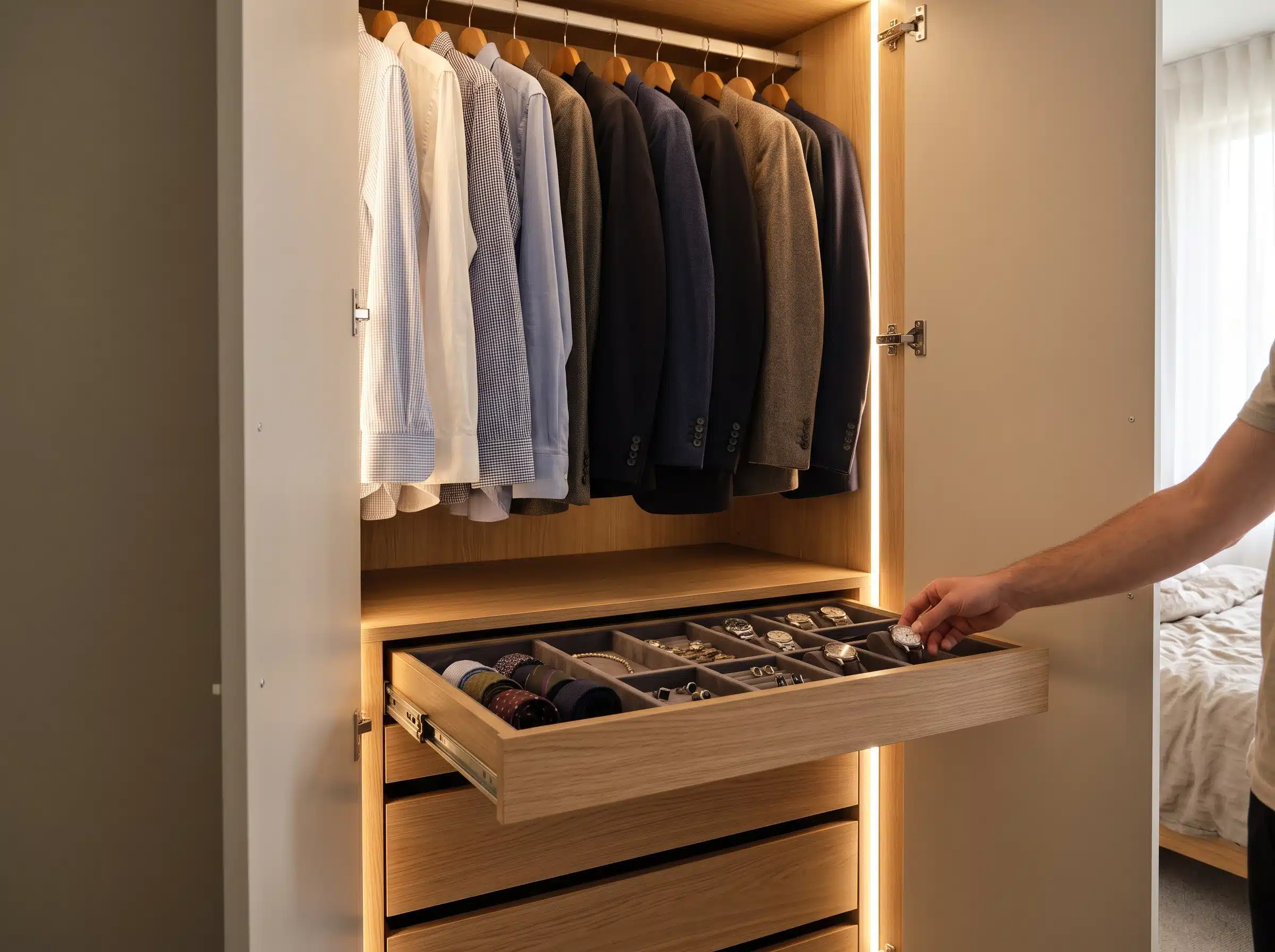
Picture a wardrobe bay with shirts and jackets hanging above a compact drawer stack. The shallow top drawer has separate compartments for watches, jewellery, and ties, while deeper drawers underneath hold underwear and socks. Close the wardrobe doors and the whole arrangement disappears behind a clean front.
What makes this layout smart is the way it brings the pieces of an outfit together. Rather than moving between a chest of drawers, a jewellery box, and the wardrobe, you have hanging clothes and smaller essentials in one place. A divided top drawer gives each accessory a visible spot, rather than leaving small items loose in a deep drawer. Leave enough clearance between the rail and the drawer stack for shirt hems to hang clear of the drawer tops.
A Folded-Clothes Column Beside Long Hanging
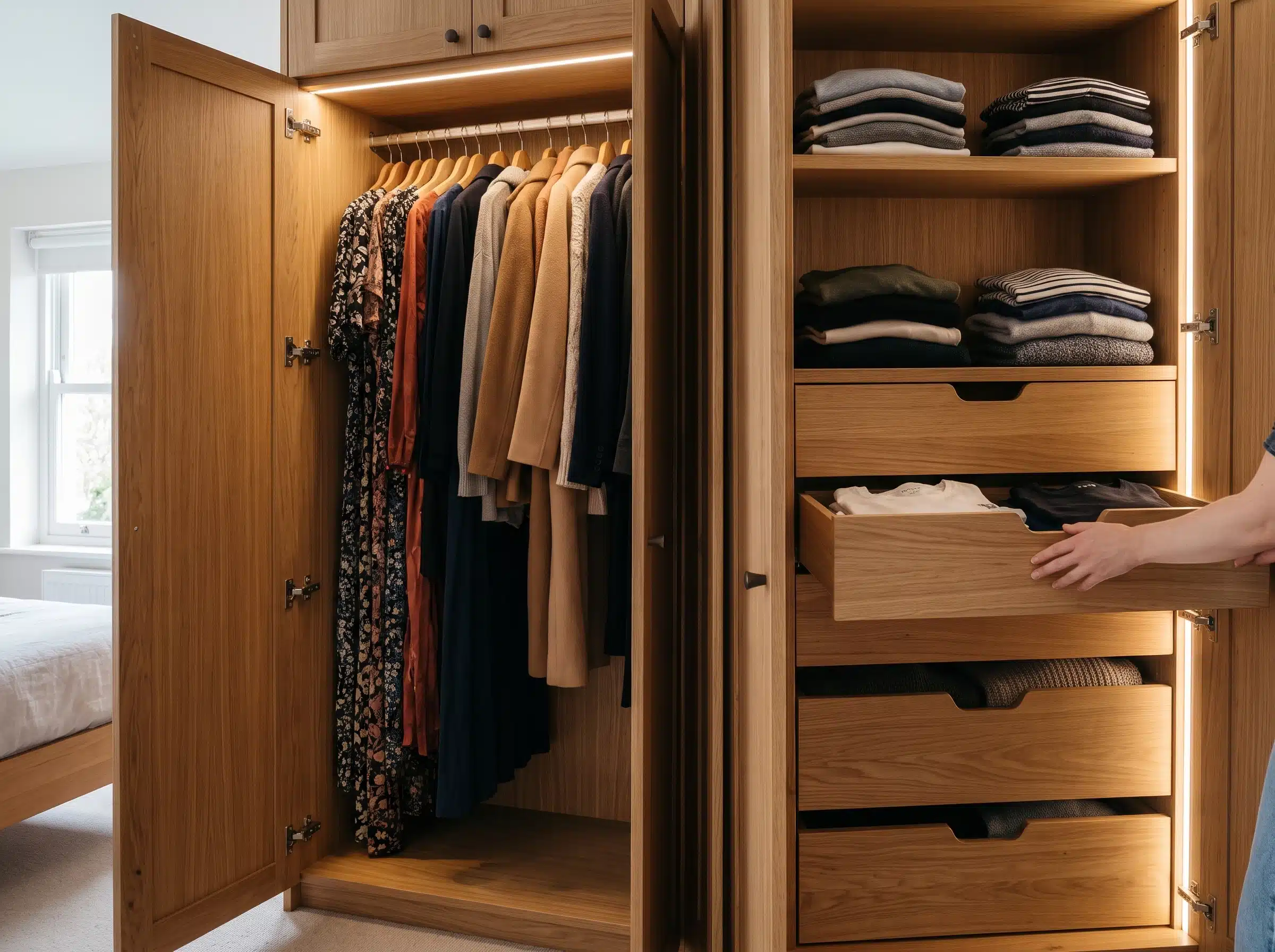
In this arrangement, dresses and coats occupy a full-height hanging bay, with a separate column of hidden drawers beside it. The column combines shallower storage for T-shirts with deeper drawers for bulkier knitwear, keeping different types of clothing together without forcing them into the same space.
The clever detail is the side-by-side layout: long garments have room to hang at full length, while folded clothes have their own accessible section. There is no need to move a coat hem aside before opening a drawer underneath. Where the wardrobe provides enough storage, this arrangement could also replace a separate chest of drawers, leaving fewer visible pieces of furniture in the bedroom.
A Concealed Everyday-Essentials Bay
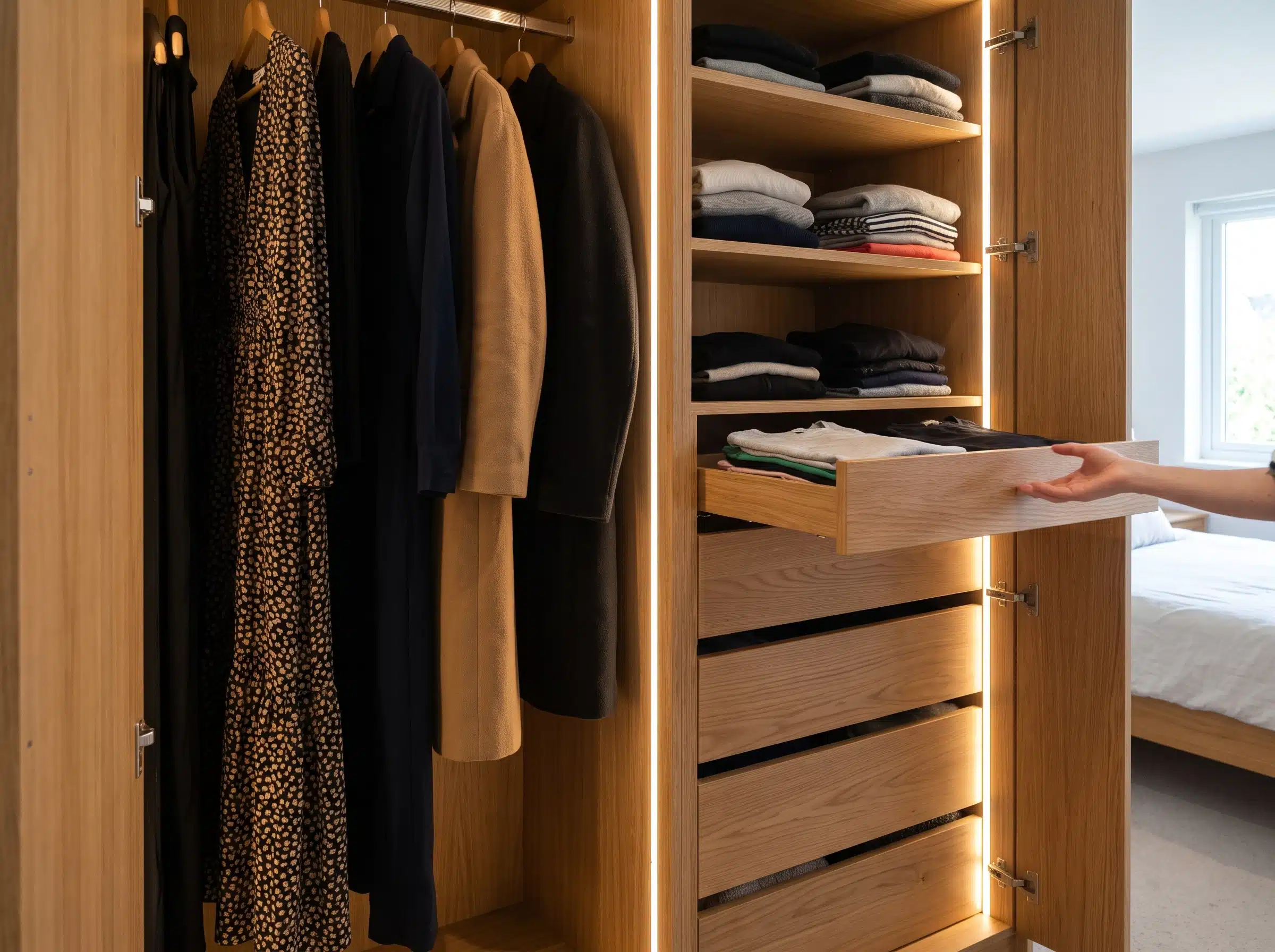
Picture one dedicated wardrobe bay designed specifically around the things you reach for every single morning. A shallow upper drawer holds small accessories, with separate drawers arranged directly below for underwear, socks, T-shirts, and activewear. Less frequently worn clothes sit in other areas of the wardrobe, keeping this particular section strictly focused on your daily essentials.
The smart detail here is having all your daily basics grouped together behind a single door, rather than spread across multiple wardrobe sections. Each category has its own dedicated place, making it easier to find what you need before closing the door to conceal the drawer fronts. Position this bay where the wardrobe door opens freely—away from bedside tables or tight corners—with enough room to pull out the drawers and stand comfortably in front of them.
Plan the Layout Before Asking for a Quote
For made-to-measure drawers, a short storage list is more useful than starting with a set number of drawers. Note what you want to store, which items you reach for every day, and any layout preferences. A room photo or rough sketch can help explain the space around the wardrobe; mark nearby furniture and the type of wardrobe door if you know it.
At Propafit, we support customers from the initial survey and design through to manufacture and installation. Sharing your priorities helps our team understand the room and how you intend to use the storage. Having these details ready also helps when requesting a fitted furniture quote.
Frequently Asked Questions
Can internal drawers be added to an existing wardrobe?
It may be possible, but it depends on the wardrobe’s construction, available depth, and how its doors operate. Have the existing unit assessed before assuming an internal drawer can be fitted without altering other parts of the layout.
Can internal drawers work behind sliding doors?
That depends on the sliding door system and the drawer’s position inside the wardrobe. Ask your designer to check that the drawer clears the door frame and can open fully.
How many internal drawers should I plan for?
There is no standard number that suits every wardrobe. Start by grouping the items you want to store and deciding which categories need their own space. Then discuss a layout that suits your room and daily routine.
Can I bring inspiration photos to a design discussion?
Yes. Photos can show the colours, handles, or drawer arrangements you like. Point out what appeals to you in each example, and use them as a visual guide rather than a guarantee that the exact hardware or finish is available.
What measurements should I bring?
If you have them, bring the wardrobe’s approximate width and depth, the door type, and details of the space around it. These notes help start the conversation, but the made-to-measure design will be based on a precise survey and confirmed dimensions.
Plan Your Project with Propafit Interiors
Want a calm, uncluttered bedroom without leaving everyday essentials out of reach? Tell us what you would like to store inside your fitted wardrobe, from jewellery and accessories to folded clothes. A few room photographs and rough measurements can help us discuss where hidden drawers could sit and how they would work alongside your hanging space and nearby furniture.
At Propafit Interiors, we support you through survey and design, manufacture, and installation. We specialise in bespoke fitted bedroom furniture that balances a clean, minimalist exterior with useful storage inside.
To discuss hidden drawers for your fitted bedroom, get in touch with our team today by emailing [email protected] or calling 01462 814080.